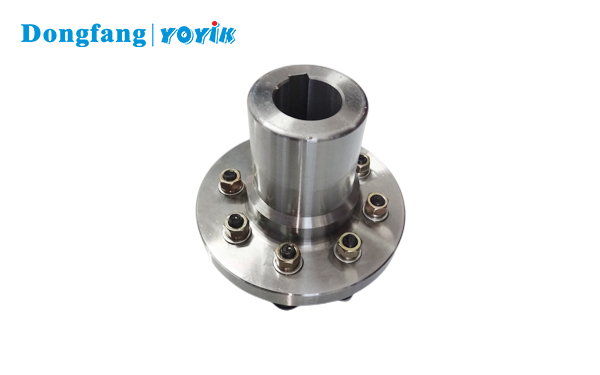
The main oil pump is the most important part of a steam turbine’s bearing safety. The 70LY-34*2 lube oil pump has a flexible coupling that connects the motor to the pump. Inside the coupling is a rubber elastomeric piece, which is often called a plum spider, that absorbs vibration and helps when the shafts aren’t perfectly lined up. If this spider breaks, the whole oil system could have problems.
Engineers usually notice Coupling problems when they hear a new noise or feel extra shaking near the pump. Since these pumps run almost all the time, the elastic parts are always under heat and pressure. Spotting the early signs of a failing pump coupling can save you from a forced shutdown or expensive damage to the pump’s internal bearings.
We supply the full 70LY-34*2 pump coupling and the specific elastic spiders needed for maintenance. Keeping a few extra spiders in your tool room is a smart way to make sure a small wear issue doesn’t turn into a big repair job during a night shift. If you need to check your current sizes, our team can send over the dimensions for the 70LY series.
Signs of a Bad Elastomeric Spider for Couplings
When the Elastomeric Spider for Couplings starts to go bad, you will probably feel more vibration first. It might feel like a high-speed “buzz” when you put your hand on the pump frame. As the material starts to crack or lose its shape, the metal parts of the Coupling might hit each other. This causes a clicking or rattling sound, which is usually loudest when the pump is starting up or slowing down.
You should also look for “rubber dust” around the base of the pump. If you see tiny bits of red or yellow plastic under the Coupling guard, the spider is falling apart. This happens because the material gets brittle and the spinning force throws the broken pieces out. At this point, the pump coupling isn’t protecting the machine anymore, and every shock goes straight into the pump’s shaft.
If you stop the pump and look inside, the spider might look squashed or deformed. This means the material has reached its limit. Once the shape is gone, the Coupling has too much “play” or backlash. This can make the oil pressure jump around and will eventually wear out the motor bearings because the load isn’t steady anymore.
Why Does the Pump Coupling Spider Fail?
Heat is the biggest enemy. The 70LY-34*2 pump moves warm oil, and the area around a turbine is always hot. Constant heat makes the Elastomeric Spider for Couplings get hard and lose its bounce. Over time, the material gets as brittle as an old cracker. Once it’s brittle, it can’t handle the twist of the motor anymore and it starts to snap under the weight of the load.
Alignment is another huge issue. If the motor and pump shafts aren’t pointing exactly at each other, the Coupling jaws will squeeze one side of the spider too hard. This constant squeezing creates a lot of internal friction and heat. You’ll often see deep grooves on the spider legs where they’ve been crushed. Even a heavy-duty pump coupling won’t last long if the shafts are crooked.
Sometimes the oil itself is the problem. Most spiders are made to handle oil, but if the oil is dirty or has the wrong chemicals, the rubber can start to swell. When the Elastomeric Spider for Couplings gets too big, it doesn’t have room to breathe. This causes the material to get pinched and eventually tear right out of the Coupling jaws while the pump is spinning at high speed.
How to Check and Troubleshoot the System
If you think the Coupling is failing, start with a simple visual check while it’s running. Look at the guard to see if anything looks wobbly or off-center. You can use a vibration pen to check the motor side and the pump side. If the numbers are very different, it’s a good sign that the spider has worn down more on one side than the other.
When you have a chance to take it apart, look at the spider for “permanent set”. This is when the spider stays flat even after you take it out of the machine. If the legs are much thinner than they used to be, the material is dead. Also, check the metal Coupling jaws. If you see shiny spots or pits, it means the metal has been rubbing together because the spider was too thin to keep them apart.
| What You See | The Likely Problem | How to Fix It |
|---|---|---|
| Cracks or hard material | Aging from heat | Change the spider and check cooling. |
| Squashed or torn legs | Bad shaft alignment | Re-align the motor and pump shafts. |
| Soft or swollen rubber | Oil contamination | Check your oil and use better material. |
Tips for Making Your Coupling Last Longer
If you want your Elastomeric Spider for Couplings to last, you have to get the alignment right. Using a laser tool is the best way to make sure the load is spread out across all the spider legs. This keeps the heat down because the rubber isn’t being worked too hard. Even if a Coupling says it can handle a little bit of misalignment, keeping it perfect will make the parts last much longer.
You also need to pick the right hardness for the spider. Some are soft for better damping, and some are hard for more power. For a 70LY-34*2 pump coupling, the spider has to handle the specific heat of your oil system. If you find your spiders are failing every few months, you might need to switch to a different material that is rated for higher temperatures.
Don’t wait for a breakdown to change these parts. Most plants find that swapping the spider every two years is much cheaper than fixing a broken pump. A quick look at the pump coupling whenever you do a filter change can help you find problems before they stop the turbine. It’s a small job that prevents a massive headache later on.
Conclusion
The 70LY-34*2 Coupling is a small part, but it’s the link that keeps the oil flowing. When the spider fails because of heat or bad alignment, the vibration can hurt the whole pump. By watching for signs like dust, noise, and shaking, you can fix things early. Keeping the shafts aligned and using the right Elastomeric Spider for Couplings will keep your turbine safe and your oil pressure steady.
Is your oil pump getting noisy? We have a full stock of spiders and complete Coupling units ready to ship. Whether you need standard parts or help with a high-heat problem, we can find what you need. Contact us today to get a quote and keep your lubrication system running without any surprises.