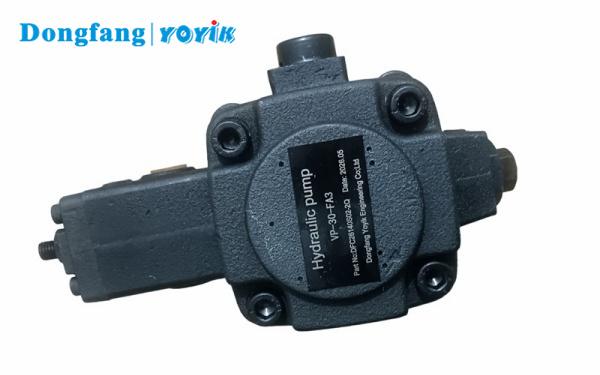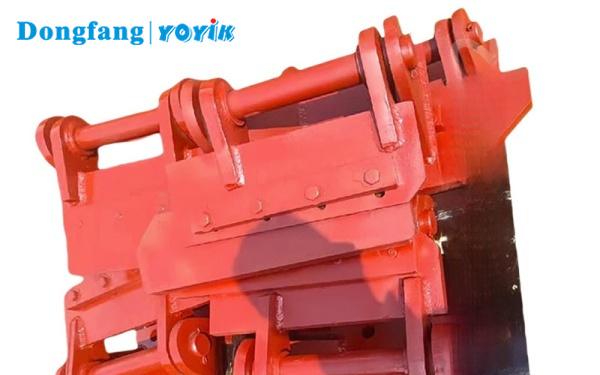
The VP-30-FA3 is a variable vane pump, a classic energy-saving oil supply power component in hydraulic systems. It completes oil suction and pressure delivery by changing the closed volume formed among the stator, rotor and vanes. It can automatically adjust the output flow according to the system load pressure. Different from conventional fixed-displacement vane pumps, it is the preferred power unit for hydraulic circuits requiring low energy consumption and low temperature rise.
Built-in with a pressure compensation mechanism, the pump can realize adaptive compensation: rapid feeding with large flow under no-load condition and automatic flow reduction during load pressure holding at the preset pressure. It effectively cuts useless power consumption and reduces system heat generation. Running quietly and smoothly, it is suitable for working conditions with strict noise control such as indoor machine tools. Featuring high structural integration and flexible matching, it brings great convenience to hydraulic system design.
Product Features
The core advantage of VP-30-FA3 lies in its built-in pressure compensation and automatic flow regulation function. Once the system reaches the set pressure, the pump automatically reduces output flow. Compared with fixed-displacement vane pumps, it greatly reduces power loss and heat generation with remarkable energy-saving performance. It achieves better control of hydraulic oil temperature rise during long continuous operation, and avoids a series of problems such as seal aging and oil deterioration caused by excessive oil temperature.
The internal vanes and stator curve are precision machined. The vanes extend and retract smoothly as the rotor rotates with low meshing impact. The whole pump runs stably and quietly at a low noise level, meeting the low-noise requirements of machine tool workshops and indoor automated production lines.
A pressure adjusting mechanism is integrated inside the pump, eliminating the need for an additional separate pressure regulating valve in the hydraulic circuit and simplifying pipeline design. It can be directly coupled with the motor via simple flange mounting for neat pipeline arrangement, lowering assembly time and potential fault points in later service.
This series is available in multiple pressure ranges and flow specifications. VP-30-FA3 corresponds to the A3 pressure grade. Engineers can select models flexibly according to equipment load, feeding speed and pressure holding requirements to match hydraulic power packs for various working conditions. The pump has a compact and small-size structure. Its vanes are made of wear-resistant alloy with good fatigue resistance, stable volumetric efficiency and minor flow attenuation after long-time operation.
Application Fields
The VP-30-FA3 variable vane pump is widely used in various medium and low-pressure hydraulic systems. Its most typical applications are hydraulic feeding and clamping circuits of metal-cutting machine tools, including lathes, milling machines, grinders and machining centers. It fits indoor workshop environments and satisfies low-noise demands.
It is also extensively adopted in small and medium-sized injection molding auxiliary machines, rubber and plastic forming equipment, hydraulic fixtures, pressure testing machines and small hydraulic balers. In the automation industry, it serves hydraulic power packs for clamping, positioning, lifting and conveying on automated production lines. It can also support hydraulic drive systems of metallurgical auxiliary equipment, light industry machinery and woodworking machinery. It is frequently selected as the power source for small auxiliary hydraulic devices in power plants and metallurgical industries, suitable for intermittent operations with pressure-holding standby.
It is ideal for equipment with variable loads, no-load fast advance and high-pressure holding processes. Combined with directional valves, relief valves, hydraulic cylinders and other components, it forms an energy-saving hydraulic system.
Precautions for Use
Before installation, verify the pump rotation direction and rated parameters. Thoroughly flush the oil tank and suction pipeline, and install a suction filter with proper filtration accuracy to prevent iron filings and impurities from entering the pump chamber, scratching the stator curved surface or jamming the vanes and pressure compensation mechanism, which would cause pressure regulation failure and unstable flow.
When assembling the pump and motor, the coaxiality of the coupling must meet the standard. Excessive coaxial deviation will generate continuous vibration and abnormal noise and accelerate the wear of bearings and vanes. The pump shaft shall not bear extra radial or axial loads transmitted from pipelines.
When commissioning pressure, adjust the built-in pressure regulating assembly slowly. Do not adjust it to the extreme high pressure at one time, nor allow long-time operation beyond the rated pressure. Otherwise, the stator is prone to plastic deformation and permanent damage of the pressure compensation function.
Select anti-wear hydraulic oil with proper viscosity. The oil temperature for continuous operation shall be kept within 15~60℃. Excessively high oil temperature accelerates aging and leakage of internal seals, while excessively low oil temperature leads to high oil viscosity and cavitation due to poor oil suction.
The drain pipeline shall be routed separately below the oil level in the oil tank to control drain backpressure. Excessive backpressure will interfere with the normal action of the variable mechanism.
Carry out regular inspections during operation, monitoring pump noise, system pressure and oil temperature. In case of pressure drift, abnormal noise or insufficient flow, shut down the pump in time, release system pressure before overhaul and cleaning, and check the wear condition of vanes, springs and stator.
Seal the oil inlet and outlet ports for spare part storage and store the pump in a dry and dust-free warehouse to avoid rusting of internal parts caused by moisture and dust. Conduct periodic oil testing in routine maintenance and replace filter elements simultaneously to maintain oil cleanliness, reduce wear of precision matching pairs inside the pump caused by contaminants and extend the overall service life of the vane pump.
DFYLSYC-2026-11-04-A