Product Introduction
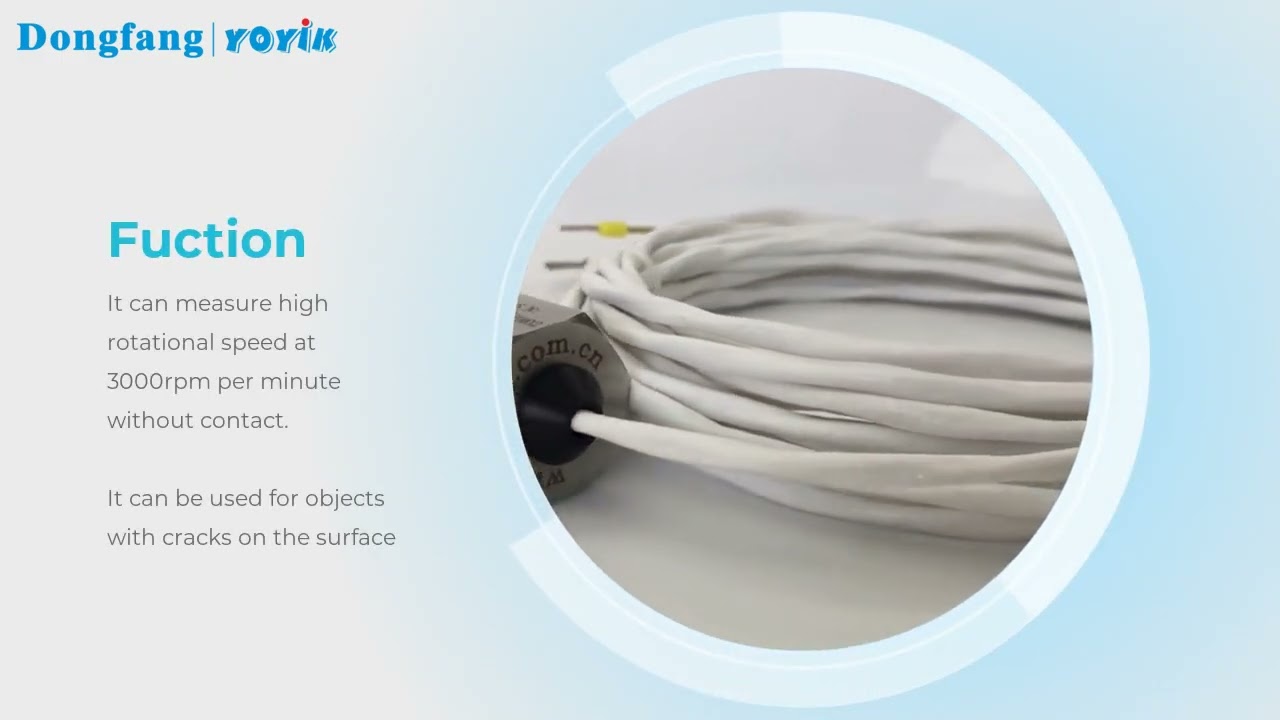
The CS-1 series rotation speed sensor can measure the rotational speed of the steam turbine of the power station at 3000rpm/min. It can measure the rotational speed and linear speed of various magnetic conducting materials such as gears, impellers, disks (or shafts) with holes (or slots, screws) without contact.
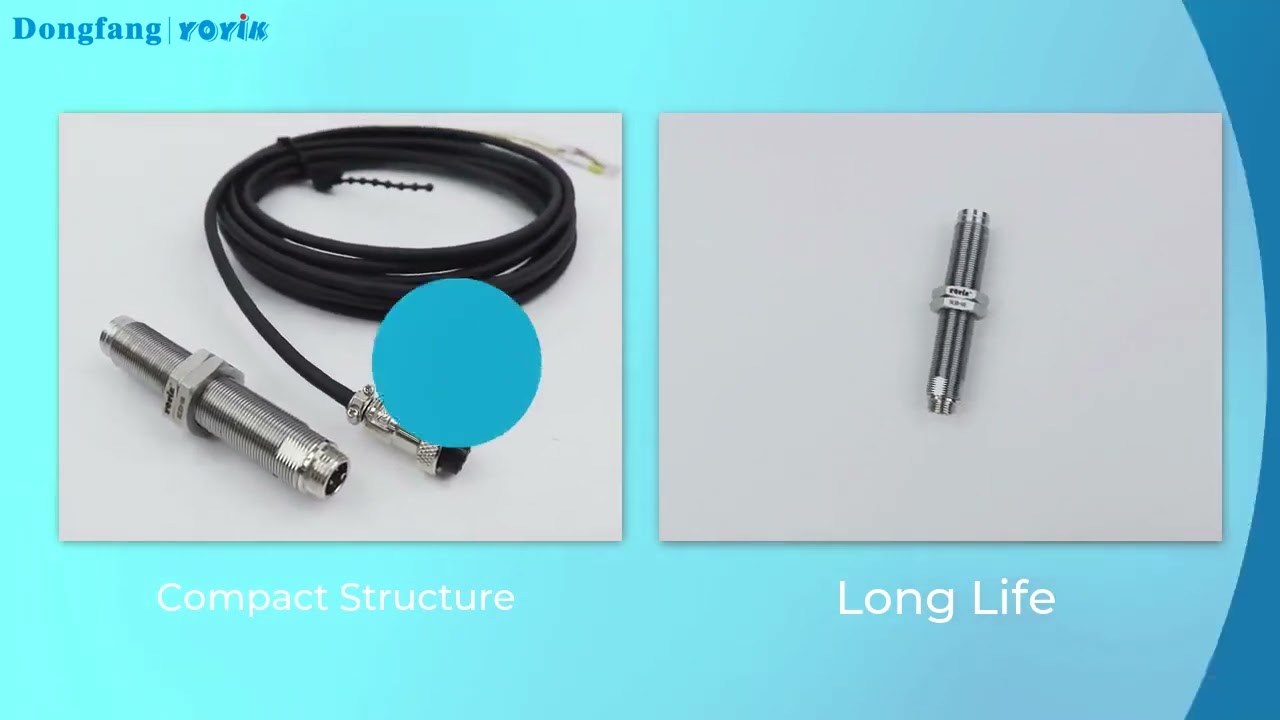
The sensor shell is a stainless steel threaded structure, and the interior is sealed and resistant to high temperature. The wiring is a special metal shielded soft wire with strong anti-interference ability.
Technical Specifications
| Parameter | Specification |
|---|---|
| Output Signal | Pulse signal (square wave) |
| Supply Voltage | DC 12V / 24V |
| Detection Distance | 1 – 2 mm |
| Frequency Response | ≤ 10 kHz |
| Operating Temperature | -20°C to +120°C |
| Protection Rating | IP65 |
| Thread Size | M16×1mm |
| Housing Material | Stainless steel |
| Installation | Thread mounting |
Available Models
- CS-1 D-065-02-01
- CS-1 D-075-03-01
- CS-1 D-080-02-01
- CS-1 D-100-05-00
- CS-1 G-065-03-01
- CS-1 G-075-05-01
- CS-1 G-090-02-01
- CS-1 G-120-03-01
- CS-1 UNF-A075-B08
- CS-1G D-085-05-01
- …
Different models vary in probe length, thread type, cable configuration, and output characteristics. Custom options are available.
Applications and Functions
The CS-1 series sensor is mainly used for speed measurement and protection of rotating machinery. Typical applications include:
- Steam turbine speed monitoring: Sends real-time speed signals to the DEH (Digital Electro-Hydraulic Control System) for overspeed protection and speed regulation.
- Compressor and fan speed detection: Works with toothed wheels to output frequency signals for start/stop control and interlock protection.
- Hydro turbine and pump speed monitoring: Operates reliably in oil mist and humid environments, ensuring stable signals at low speeds.
Key Features
- Passive operation (no external power supply required)
- Outputs sinusoidal frequency signal
- Strong anti-interference performance, suitable for long-distance transmission
- Stainless steel housing with good corrosion resistance
- Threaded design for easy installation
Troubleshooting Guide
| Problem | Possible Cause | Recommended Action |
|---|---|---|
| No output signal | 1. Installation gap too large 2. Insufficient gear teeth or incorrect material 3. Internal coil open circuit |
1. Adjust gap to 0.5–1.5 mm 2. Use gear with module ≥ 2 and magnetic material (e.g. 45# steel) 3. Measure DC resistance; replace sensor if infinite |
| Low signal amplitude | 1. Gap too large 2. Speed too low 3. Dirty or worn gear surface |
1. Adjust installation gap 2. Check if speed is below minimum operating speed 3. Clean gear surface |
| Unstable or fluctuating signal | 1. Poor grounding of shielded cable 2. Strong electromagnetic interference nearby 3. Loose installation |
1. Ensure single-point grounding of shield 2. Keep away from VFDs and high-current cables 3. Tighten mounting nut |
| Failure in high temperature | Operating temperature exceeds 120°C | Select high-temperature version (specify when ordering) |
| Insulation resistance drops | Moisture ingress or cable damage | Replace sensor and improve environmental protection |
FAQ
Q1: Is the CS-1 sensor active or passive?
A: It is passive. No external power is required. It generates induced voltage when the gear cuts magnetic field lines and outputs a frequency signal.
Q2: What is the recommended installation gap?
A: 0.5–1.5 mm is recommended. A smaller gap gives a stronger signal, but avoid contact with the gear. Typically, 0.8–1.2 mm works best.
Q3: Can it measure zero speed?
A: No. At very low speed, the signal is too weak. Normally, speed ≥ 30 rpm is required. For zero speed, use a Hall effect or conductivity sensor.
Q4: Is the sensor corrosion-resistant?
A: Yes. The stainless steel housing resists oil mist and moisture. For acidic or alkaline environments, use additional protection.
Q5: Is customization available?
A: Yes. Probe length, thread size, output signal, and cable type can be customized.